Could 2026 Be a Major Subsidence Year? What Homeowners Should Watch For
The hot, dry conditions experienced across much of the UK in 2026 have increased concern about subsidence, particularly in areas with shrinkable clay soils.
7
min read
The hot, dry conditions experienced across much of the UK in 2026 have increased concern about subsidence, particularly in areas with shrinkable clay soils.
It is too early to confirm whether 2026 will become a major subsidence event year. However, exceptionally low rainfall, high soil moisture deficits and rising claim costs all point to an elevated risk. With subsidence notifications commonly approaching their seasonal peak around September, homeowners may begin noticing cracks or other signs of movement as summer gives way to autumn.
Why is subsidence a concern in 2026?
The environmental conditions associated with previous subsidence spikes have persisted throughout 2026.
According to the Environment Agency’s July water situation report, England received just 6.5mm of rain during July, 10% of the long-term average and the lowest July total since records began in 1836. By the end of the month, soils across England were much drier than average, with soil moisture deficits in many regions approaching the highest levels recorded since 1961.
Conditions were particularly dry in eastern and south-eastern England, where shrinkable clay soils already make some properties more susceptible to ground movement.
The heat has been equally significant. Provisional Met Office figures, published in August, showed that the UK was on course for its warmest summer on record, following the second-warmest June and July.
Subsidence claims are also becoming more expensive
The current concern follows an already costly year for subsidence.
Domestic subsidence payouts reached £307 million in 2025, 10% more than in 2024 and the highest annual total since the Association of British Insurers began collecting the data in 2017.
The latest figures show that costs have continued to rise. The Association of British Insurers reported that insurers paid £72 million for domestic subsidence claims between April and June 2026. The average claim reached a record £20,000 – more than £2,000 higher than during the same quarter in 2025.
These figures do not prove that every crack appearing during 2026 is related to the summer weather. They do, however, show why possible structural movement deserves careful investigation rather than guesswork or a quick cosmetic repair.
Why can cracks become noticeable after a hot, dry summer?
Clay-rich soil changes volume as its moisture content changes. During prolonged hot and dry conditions, clay can lose moisture and shrink. If the ground beneath one part of a property moves more than the ground beneath another, the foundations and walls above may be placed under stress.
Trees and large shrubs can intensify this process by drawing additional moisture from the soil, particularly where they are close to a building with relatively shallow foundations.
Damage may develop during the dry period but only become apparent later. As rain returns, the ground does not necessarily regain moisture evenly or immediately. Existing cracks may become more noticeable, change in width or be accompanied by other signs of movement.
Autumn rewetting can therefore be an important part of the annual subsidence cycle, but timing alone does not establish the cause. Cracking may also result from thermal movement, ordinary settlement, defective lintels, drainage problems or previous building work.
Which warning signs should homeowners investigate?
Fine plaster cracks are common and are not necessarily a structural concern. It is more important to look for a developing pattern than an isolated blemish.
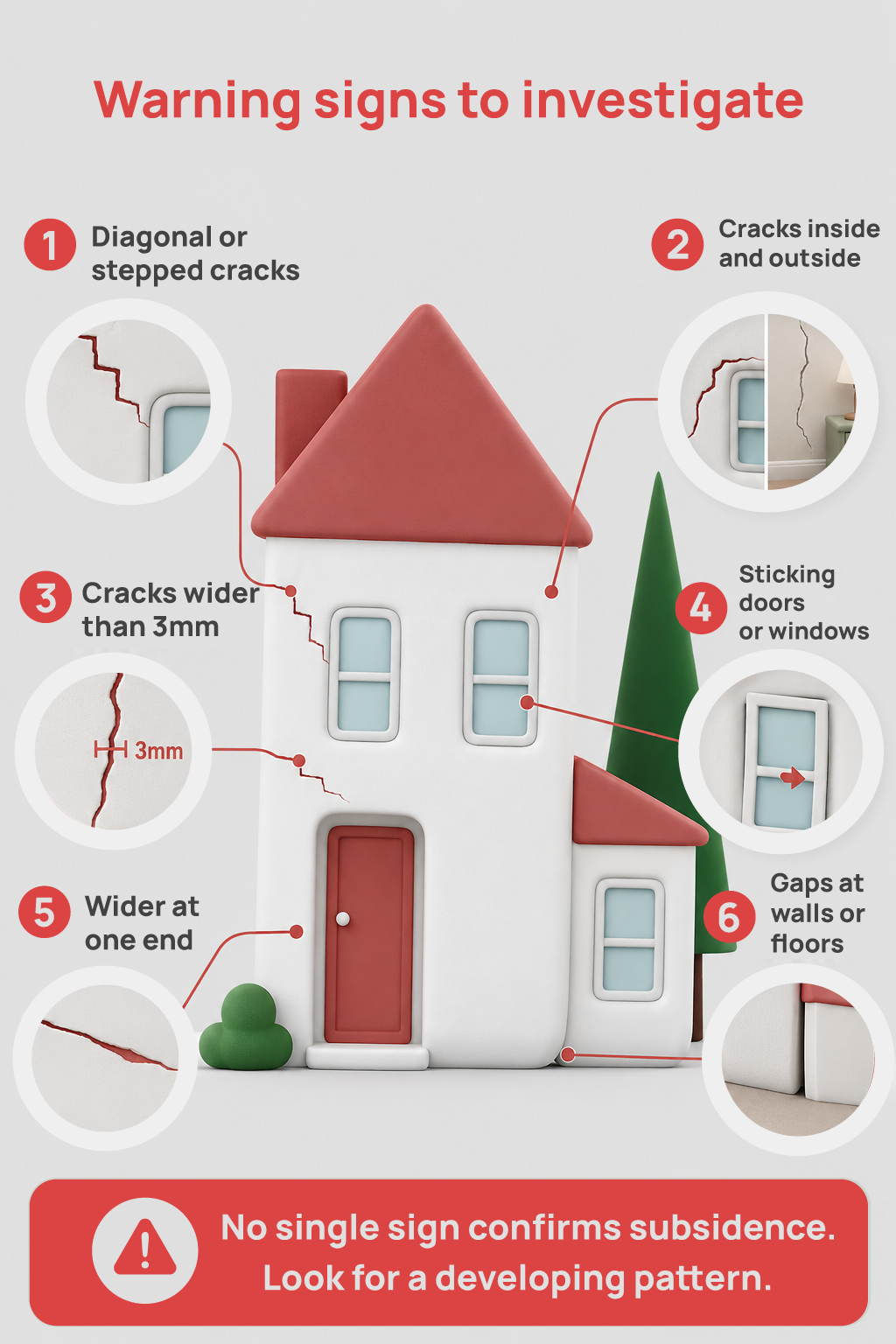
Warning signs that may merit further investigation include:
a new crack wider than approximately 3mm;
diagonal or stepped cracking, particularly around doors and windows;
a crack that is wider at one end than the other;
corresponding cracks visible on both the inside and outside of the property;
cracking where an extension joins the original building;
doors or windows that have suddenly started sticking;
wallpaper rippling, tearing or separating without an obvious cause;
gaps appearing between walls, floors or skirting boards; and
cracks that continue to widen or reappear after being filled.
No single sign confirms subsidence. The location, direction, width and progression of the damage all need to be considered alongside the property, soil, nearby vegetation and drainage.
When should you contact your insurer?
If you notice a pattern of cracking or movement that could indicate subsidence, contact the insurer named in your policy schedule as soon as reasonably possible. Claims are handled by the insurer rather than the insurance broker.
Explain:
what you have noticed;
when the damage first became apparent;
whether it has changed;
where it is located; and
whether there has been recent tree, drainage or building work nearby.
Take dated photographs and retain any previous images that show the same area. These may help demonstrate whether the damage is changing.
Avoid filling the cracks, removing trees or commissioning permanent structural repairs before speaking to the insurer. Altering the property or removing evidence can make the cause more difficult to establish. Tree removal can also create a risk of heave in some clay soils, while protected trees may require consent from the local authority.
Your insurer may request photographs, appoint a loss adjuster or arrange an inspection by a surveyor or structural engineer. Any investigation and repair plan should be based on professional evidence rather than a homeowner’s own diagnosis.
Does home insurance cover subsidence?
Buildings insurance often includes cover for damage caused by subsidence, heave and landslip, but the excess, exclusions and conditions vary between policies.
Whether a particular claim is covered will depend on the cause of the damage, when it occurred and the wording of the individual policy. Normal settlement, wear and tear, defective workmanship and pre-existing damage may be treated differently from an insured subsidence event.
Check your policy schedule and policy wording rather than assuming that cover applies. If the property has experienced movement or a previous claim, our subsidence home insurance page explains how specialist insurers may assess its history and the evidence they could request.
What happens if movement cannot immediately be confirmed?
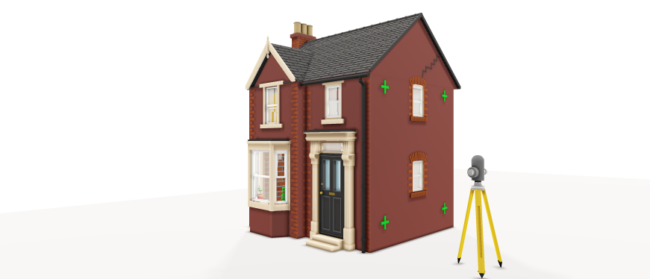
Subsidence is not always diagnosed after a single inspection. If the cause or extent of movement remains uncertain, the insurer, loss adjuster or appointed engineer may recommend a period of monitoring.
This could involve crack gauges, level surveys, drainage investigations or other measurements taken over several months. Monitoring may need to cover different seasons so that the professionals involved can establish whether movement is active, seasonal, historic or caused by another defect.
The recommendation to monitor a crack does not, by itself, mean that a property has confirmed subsidence. However, arranging new buildings insurance can become more difficult while an investigation remains unresolved, and a new insurer may exclude subsidence until the outcome is known.
Our guide to home insurance while subsidence monitoring is underway explains the possible insurance implications, the evidence insurers may require and why remaining with the insurer handling an open claim is often the most practical option where this is available.
Should homeowners be worried about subsidence in autumn 2026?
The conditions justify awareness, not panic.
Most cracks are not evidence of serious structural movement, and even confirmed subsidence does not automatically mean that a property will require underpinning. The cause must first be identified, any continuing movement addressed and the appropriate repair determined.
However, 2026 has combined record low rainfall, exceptionally dry soils and sustained high temperatures across areas already susceptible to clay shrinkage. With claim notifications likely to emerge through late summer and autumn, homeowners should watch for new or changing patterns of damage and report credible concerns promptly.