How to Keep a Listed or Period Home Cool in a Heatwave
Find practical advice on keeping a listed or period home cooler during hot weather.
9
min read
Hot weather can be uncomfortable in any home, but listed and period properties often need a more careful approach. Thick walls, traditional windows, original materials and protected architectural features can all affect how heat moves through the building.
In May 2026, the UK provisionally recorded its hottest May day, with 35.1°C recorded at Kew Gardens. As warmer summers and heatwaves become more common, overheating is likely to become a bigger concern for many homeowners.
For owners of listed, historic or period homes, the challenge is not simply how to cool the property down. It is how to do so without damaging the building, affecting its character or carrying out work that may need listed building consent.
In short: older homes can often be kept cooler with simple measures such as shading, ventilation and better control of internal heat. However, more permanent changes, such as new glazing, solar film, mechanical ventilation or air conditioning, may need specialist advice.
Why can listed and period homes overheat?
Many UK homes were designed with colder weather in mind. Over time, homeowners have also made changes to keep warmth inside, such as adding insulation, secondary glazing, draught proofing or modern heating systems.
These improvements can be helpful in winter, but they may also affect how the building performs in summer. Heat can build up indoors from sunlight, warm external air, heating systems, hot water pipes, lighting, appliances and people using the home.
Some parts of the property may be more affected than others. Rooms in the roof space, south-facing rooms, conservatories, rooms with large areas of glazing and poorly ventilated spaces can all become difficult to keep cool.
Why older homes behave differently in hot weather
Traditional buildings often behave differently from modern homes. Many were built with materials that absorb and release heat slowly. Stone, brick, lime plaster and thick masonry walls can help moderate changes in temperature.
This can be an advantage, but it depends on the property. A building with good shading and night-time cooling may remain comfortable for longer. A building that stores heat throughout the day but cannot release it overnight may stay uncomfortably warm.
That is why a whole-property approach matters. The best solution will depend on the age, construction, orientation, setting, condition and use of the home.
Simple ways to keep a period home cooler
Before considering major changes, it is often worth starting with simple steps that do not affect the structure or appearance of the building.
Close curtains, blinds or shutters during the hottest part of the day to reduce direct sunlight entering the room.
Open windows when the outside air is cooler, such as early in the morning or later in the evening, where it is safe to do so.
Keep windows closed during peak heat if the outside air is warmer than the room.
Turn off unnecessary appliances, as computers, televisions, lighting and other electrical items all give off heat.
Check heating controls to make sure the heating is fully off during warm weather.
Use fans to improve air movement, especially in rooms where the air feels still.
Keep internal doors open where appropriate to allow cooler air to move through the home.
These measures may sound simple, but they can make a noticeable difference, particularly if they are used consistently before the property has already become too warm.
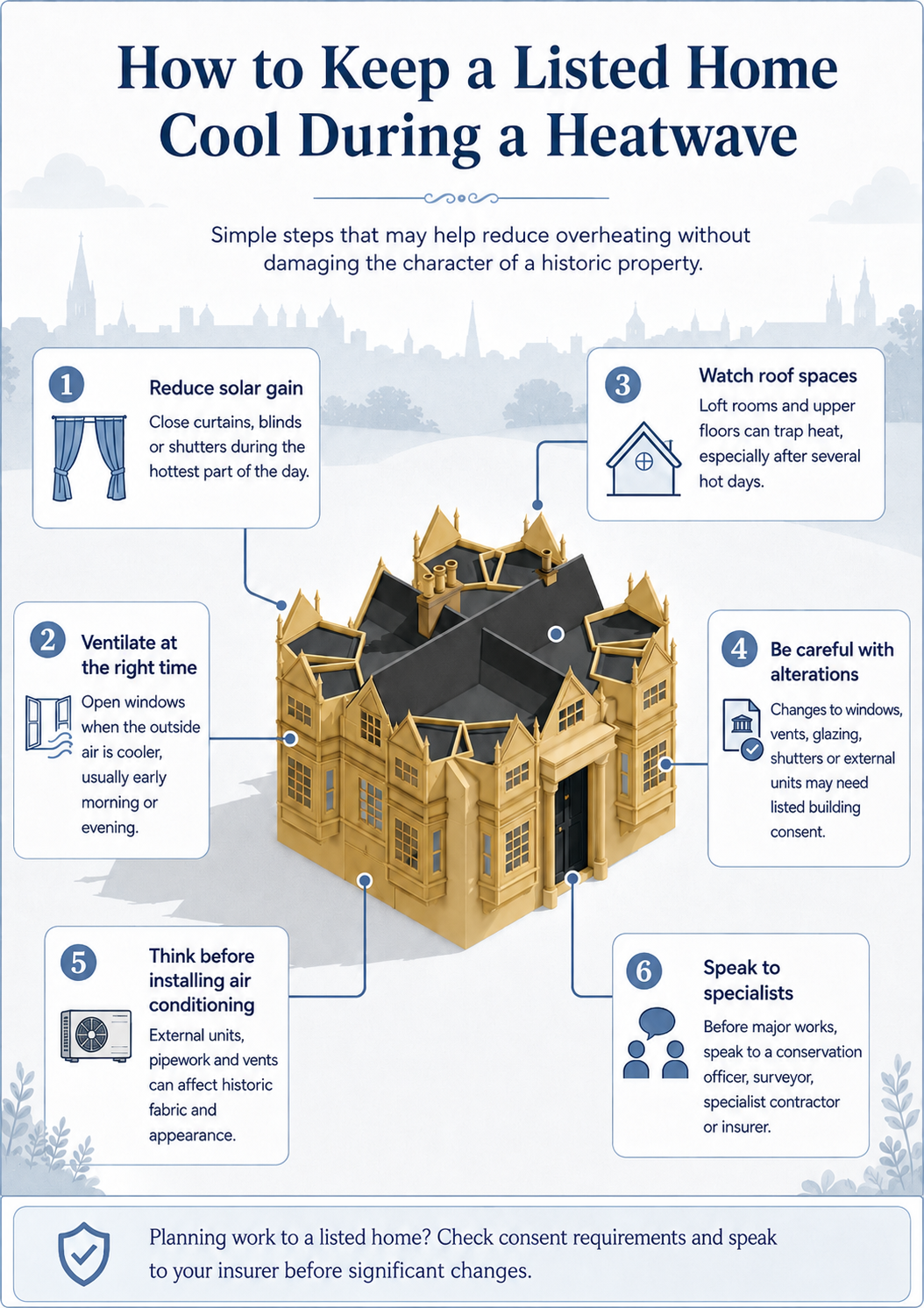
The infographic below summarises some of the main ways to reduce overheating in a listed or period home.
Shading, windows and solar gain
Solar gain is one of the main causes of overheating. This is the heat that enters the building through sunlight, especially through windows and glazed doors.
In many period homes, traditional shutters, curtains and blinds can help reduce heat while also preserving the character of the property. External shading can be more effective than internal shading, because it stops some sunlight before it reaches the glass. However, external changes may be more sensitive on listed or historic buildings.
Owners should be cautious with more permanent measures, such as solar control film, replacement glazing, external shutters, awnings or changes to window openings. These can alter the appearance of the building and may not be suitable for all listed properties.
Important: if your home is listed, changes that affect its character or appearance may need listed building consent. It is sensible to speak to your local authority conservation officer before carrying out visible or permanent changes.
Using ventilation carefully
Ventilation can help remove warm air and bring in cooler air, but timing matters. Opening windows during the hottest part of the day may bring more heat into the home. Ventilation is usually more effective when the outside air is cooler than the air inside.
Night-time ventilation can help some buildings release stored heat, particularly after a hot day. However, this must be balanced with security, safety, noise, pollution and the practical layout of the property.
Mechanical ventilation may be suitable in some cases, but it can be more complex in older homes. Ductwork, vents, fans and equipment may affect historic fabric, require space, or create visual changes. In listed buildings, this type of work should be considered carefully before installation.
Be careful with insulation and retrofit work
Insulation can help reduce heat loss in winter, but it should not be treated as a simple fix for every historic home. Traditional buildings need to manage moisture, airflow and temperature in a balanced way.
Poorly planned retrofit work can create unintended problems. For example, it may reduce natural ventilation, trap moisture, alter how walls and roofs dry out, or affect the historic character of the property.
This does not mean listed and period homes cannot be improved. Many can. However, the work should be planned carefully, using materials and methods that suit the building.
Can you install air conditioning in a listed building?
Air conditioning may be possible in some listed or period homes, but it is rarely a simple decision. External units, vents, pipework, internal ducting and changes to walls, windows or roofs can all affect the building.
Before installing air conditioning, it is worth asking:
Will any equipment be visible from outside?
Will walls, ceilings, floors or windows need to be altered?
Could the work affect historic fabric?
Is there a less invasive way to reduce overheating first?
Will listed building consent or planning permission be needed?
Will the installation affect the building’s electrical system or fire risk?
For some homes, less invasive measures such as shading, fans, better ventilation management or improved heating controls may be more appropriate as a first step.
Why this matters for listed building insurance
Overheating itself is not usually the type of issue people think of as an insurance claim. However, the work carried out in response to overheating can have insurance implications.
If you are planning significant alterations to a listed or period home, you may need to tell your insurer or broker. This is especially important if the work involves:
changes to the structure of the property;
work to the roof, walls, windows or external appearance;
installation of fixed cooling, ventilation or electrical systems;
building works, scaffolding or contractors on site;
changes that require listed building consent or planning approval;
alterations that affect the property’s rebuild cost.
Listed buildings can be more complex to repair because materials, craftsmanship and conservation requirements may differ from standard homes. This is one reason why specialist listed building insurance can be important.
If you are unsure whether planned works could affect your cover, it is best to check before work begins.
When to get professional advice
You should consider specialist advice if your home regularly becomes uncomfortably hot, or if you are planning permanent changes to reduce overheating.
Depending on the property and the work involved, useful sources of advice may include:
a conservation officer at your local authority;
a surveyor with experience of listed or historic buildings;
a conservation architect;
a retrofit specialist familiar with traditional construction;
a qualified heating, ventilation or cooling specialist;
your home insurance provider or broker.
Taking advice early can help you avoid unsuitable work, unnecessary cost and problems with consent.
Final thoughts
As the UK experiences hotter summers, keeping homes cool is likely to become a bigger concern for many households. For listed and period property owners, the answer is not always to install the newest system or make quick changes.
The best approach is usually to understand how the building works, reduce heat gain where possible, improve ventilation safely and avoid alterations that could harm the property’s character or fabric.
If you own a listed building and are considering changes to make it more comfortable in hot weather, take advice before starting work. It may protect both the building and your insurance position.
FAQs
Why do some period homes get so hot in summer?
Period homes can overheat because of solar gain, poor ventilation, warm roof spaces, retained heat, modern insulation, heating controls, appliances and large areas of glazing. Each property is different, so the cause can vary from room to room.
Are listed buildings naturally cooler?
Some listed and period buildings can stay cooler because thick walls and traditional materials may help moderate temperature changes. However, this is not always the case. A home can still overheat if it receives strong sun, has poor ventilation or cannot release stored heat overnight.
Can I install air conditioning in a listed building?
It may be possible, but you should seek advice first. Air conditioning can involve external units, vents, pipework and internal alterations. If the work affects the character or appearance of a listed building, listed building consent may be needed.
Do shutters and blinds help keep a period home cool?
Yes, shutters, blinds and curtains can help reduce heat from direct sunlight. External shading is often more effective, but it may be more sensitive on listed buildings. Internal shading is usually easier to use without altering the outside of the property.
Should I tell my insurer about work to reduce overheating?
You should check with your insurer or broker if the work is significant, structural, external, involves contractors, changes the building fabric or may affect the property’s rebuild cost. This is especially important for listed and non-standard homes.
Using a listed home as a filming location introduces risks that ordinary household use does not. Discover what to check before allowing a production crew into your property.