When should you switch from self-build insurance to home insurance
Find out when to switch from self-build site insurance to home cover and what to check before moving in.
5
min read
Your self-build is almost finished. The kitchen is in, you’re planning the move and you’re waiting for building control sign-off. If your site policy is due to end around the same time, when should your home insurance start?
The build’s completion date, your move-in date and the end of your site cover may fall on different days. Checking these arrangements in advance helps you keep suitable insurance in place as the project becomes your home.
When does self-build site insurance end?
Self-build site insurance can end on the expiry date shown in your schedule, when construction is completed or when a completion certificate is issued, depending on the policy. Ask your insurer which event ends your cover and whether moving in affects it.
Ask your current provider whether it can offer suitable home insurance once the build is complete and what arrangements you need to make before any site cover ends.
Arrange for your new insurer to confirm acceptance, the cover provided and the start date before you cancel or allow your existing cover to end.
Can you get home insurance before the completion certificate?
Requirements vary between insurers. At Intelligent Insurance, a completion certificate must have been issued before we can consider home insurance for a self-built home. Acceptance will also depend on the property details, any remaining work and the insurer’s underwriting criteria.
If you’re approaching completion, you can start gathering the information needed for a quote. If your certificate is delayed, ask your site insurer to confirm what cover remains in place while you wait, including whether the physical completion of the building affects it.
Snagging means dealing with small defects or finishing touches near the end of a build, such as touching up paint, adjusting a sticking door or fixing loose skirting.
Once the completion certificate has been issued, minor snagging may be acceptable to our panel, depending on its scale. Tell us what remains, who will carry out the work and when it should be finished so the insurer can assess it.
If roofing, structural work or the main electrical installation is still unfinished, explain that to your site insurer and building control body before planning the switch to home insurance.
What if you move in before the build is finished?
Before moving in, check with your building control body whether you can occupy the property at that stage. Ask your site insurer whether the policy allows you to live there while work continues and what cover applies once you do. Check separately whether your furniture and belongings will be covered from the day you bring them in.
Tell your insurer the intended move-in date and describe any ongoing work. Ask it to confirm in writing what cover applies once you move in and whether any restrictions or additional conditions will apply.
What if your site insurance expires before completion?
Contact your site insurer or broker before the expiry date to ask whether suitable cover can be extended and on what terms. Get any agreed extension confirmed in writing before the existing cover ends. An extension needs the insurer’s agreement.
For example, if your policy ends on Friday and your final inspection has moved to the following week, contact the insurer as soon as you know about the delay.
When you’re ready to switch, confirm the end of site cover and the start of home cover in writing. If the completion or move-in date changes again, check both arrangements.
What information do you need to arrange home insurance?
Have the following details available when you speak to the insurer or broker:
Your completion certificate and details of any structural warranty.
Any remaining work, who will carry it out and when it is due to finish.
Your move-in date and how long the completed home will be empty beforehand, if applicable.
The estimated cost of rebuilding the finished home using professional labour and suitable materials, including relevant site clearance and professional fees.
The amount of contents cover needed for your furniture and other belongings.
If you did some of the work yourself, your original build budget may understate what it would cost to rebuild. Our rebuild cost guide explains how to approach this figure and when a professional assessment may be useful.
Arranging cover for your completed self-build
Once your completion certificate has been issued, you can discuss buildings and contents insurance for your self-built home with our team.
If your property uses unusual materials or a less common construction method, our non-standard home insurance page explains more about the types of home we may be able to help with.
Contact Intelligent Insurance with your property details and any remaining snagging so we can check what our panel can offer.
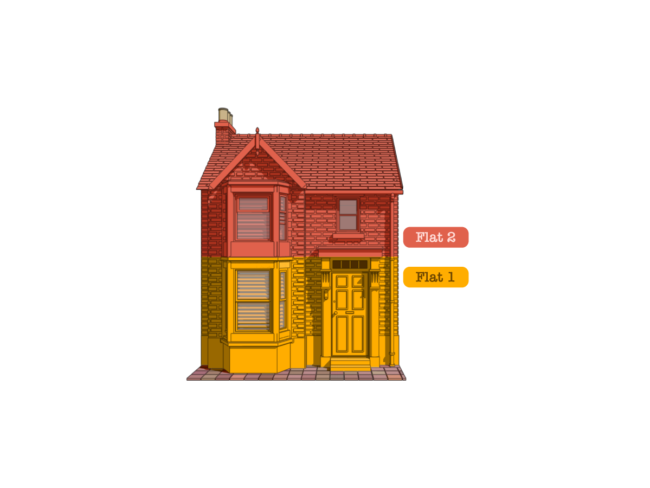
A house divided into two flats can raise questions about who insures what. We explain how ownership, shared structures and occupancy affect the cover you need.
The hot, dry conditions experienced across much of the UK in 2026 have increased concern about subsidence, particularly in areas with shrinkable clay soils.