A burglary can be stressful enough without worrying about what happens to your home insurance afterwards. If you have made a claim for theft, attempted theft or damage caused during a break-in, you may be concerned that your next home insurance quote will be more expensive, restricted or even declined.
The good news is that a previous burglary claim does not always mean you cannot get home insurance. However, insurers are likely to ask more questions about what happened, how much the claim was worth, and what steps have been taken to reduce the risk of it happening again.
This guide explains how a burglary claim can affect your home insurance, what information you may need to provide, and how to improve your chances of finding suitable cover.
Does a burglary claim affect home insurance?
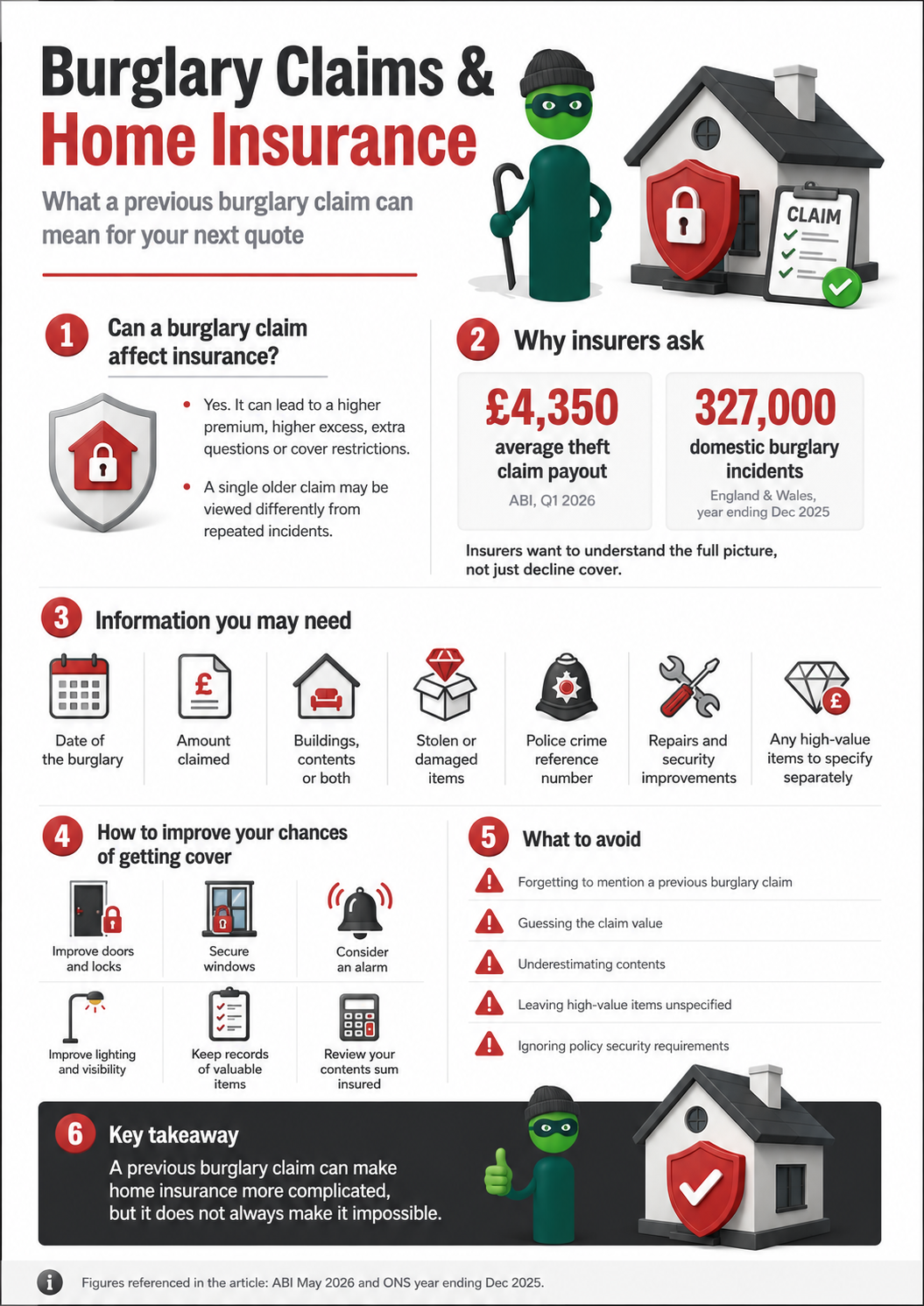
Yes, a burglary claim can affect home insurance. Insurers use previous claims to help assess risk. A home with a recent theft or burglary claim may be seen as more likely to claim again, especially if there have been several incidents or if the property has not been made more secure.
This does not mean every insurer will refuse cover. Some may still offer a policy but at a higher premium. Others may apply a higher excess, ask for extra security, restrict theft cover, or request more information before they decide.
The level of impact will depend on the circumstances. A single claim several years ago may be viewed differently from repeated burglaries at the same property.
Why do insurers ask about burglary claims?
Insurers ask about previous burglary claims because theft claims can be costly. ABI figures from May 2026 show that home insurers paid an average of £4,350 for theft claims in the first quarter of 2026, up from £3,800 the previous year.
Burglary also remains a common issue for households. ONS data for the year ending December 2025 estimated around 327,000 domestic burglary incidents in England and Wales, although this was down from the previous year.
When an insurer reviews a burglary claim, they may look at:
- when the burglary happened
- how much was claimed
- whether there were signs of forced entry
- whether the property was occupied at the time
- whether valuable items were stolen
- whether there have been repeat incidents
- whether locks, alarms or other security measures have been improved
The aim is not always to decline the application. In many cases, the insurer is trying to understand the full picture before offering terms.
When applying for home insurance after a burglary claim, it helps to have the right information ready. This may include:
- the date of the burglary
- the amount claimed
- whether the claim was for buildings, contents or both
- details of any stolen or damaged items
- the police crime reference number, if available
- details of any repairs made after the break-in
- details of new locks, alarms, CCTV or security lighting
- whether any high-value items need to be listed separately
Try not to guess. If you cannot remember the exact claim value or date, it may be worth checking with your previous insurer before applying.
Do you have to tell insurers about a previous burglary?
Yes, if you are asked about previous claims, you should answer accurately. This is important when buying a new policy, renewing cover, or making changes to an existing policy.
The Financial Ombudsman explains that consumers need to take reasonable care not to give incomplete or misleading information when taking out insurance.
This matters because non-disclosure can cause problems later. In one Financial Ombudsman case, a customer had not disclosed a previous burglary claim. When she later made another burglary claim, the insurer paid only part of the claim because the original premium had been based on incomplete information.
Being upfront may mean the quote is slightly higher, but it reduces the risk of a claim being challenged later.
Can home insurance be refused after a burglary claim?
Yes, it can happen. Some insurers may decline cover after a burglary claim, especially if the claim was recent, high value, or part of a pattern of repeated theft claims.
This is more likely if:
- there have been several burglary or theft claims
- the property has poor security
- the home is often left empty
- valuable contents are not properly specified
- the applicant cannot provide clear claim details
- the previous insurer cancelled, refused or restricted cover
However, a refusal from one insurer does not always mean you cannot get cover elsewhere. Specialist insurers and brokers may be able to look at the wider circumstances rather than relying only on a standard online quote journey.
How to improve your chances of getting cover
There are practical steps that may help after a burglary claim. These will not guarantee cheaper insurance, but they can show that the risk has been reduced.
Improve doors and locks
Make sure external doors have suitable locks and that patio doors, French doors and back doors are secure. If the burglary involved forced entry, keep records of any repairs or lock upgrades.
Secure windows
Windows should close and lock properly, especially on the ground floor or where access is easier from a flat roof, extension, garden wall or outbuilding.
Consider an alarm
Some insurers may ask whether the property has an alarm, especially after a theft claim. If you install one, check whether it needs to be maintained, monitored or set whenever the home is empty.
Improve lighting and visibility
Security lighting can help reduce dark areas around entrances, side passages and gardens. Police.uk also recommends reducing hiding places around the home and improving outside visibility where possible.
Keep records of valuable items
For contents insurance, it can help to keep receipts, valuations, photographs and serial numbers for expensive items. Jewellery, watches, art, musical instruments and specialist equipment may need to be listed separately.
Review your contents sum insured
After a burglary, many people realise their contents are worth more than they thought. A room-by-room check can help make sure your contents sum insured is realistic.
What should you avoid?
After a burglary claim, avoid rushing through an insurance quote without checking the details. Small mistakes can create problems later.
Try to avoid:
- forgetting to mention a previous theft or burglary claim
- guessing the claim value
- saying “no claims” because the claim was made through a previous insurer
- failing to mention that a previous insurer declined or cancelled cover
- underestimating the value of contents
- leaving high-value items unspecified
- ignoring security requirements listed in the policy wording
If an insurer asks for specific information, answer as clearly as possible. If something is uncertain, explain that rather than guessing.
When specialist home insurance may help
If you have had a burglary claim and are finding it difficult to get cover, specialist home insurance may help. This can be especially useful if you have also had other claims, if your property is non-standard, or if a previous insurer has refused renewal.
Intelligent Insurance offers home insurance for people with previous claims and says that past claims should not necessarily shut people out of cover. The claims history page also explains that the full picture can be considered, including what happened, what has changed, and what prevention steps have been taken.
A previous burglary claim may make insurance more complicated, but it does not always make it impossible.
FAQs
Can I get home insurance after a burglary claim?
Yes, you may still be able to get home insurance after a burglary claim. Some insurers may charge more or ask extra questions, but a previous claim does not automatically mean you will be refused.
How long does a burglary claim affect home insurance?
This depends on the insurer and what they ask during the quote process. Many insurers ask about claims within the last few years, but the exact period can vary. Always answer the questions you are asked accurately.
Will my premium go up after a burglary claim?
It may do. A burglary claim can make the property appear higher risk, especially if the claim was recent or high value. Security improvements may help show that steps have been taken to reduce future risk.
Do I need to tell a new insurer about an old burglary claim?
Yes, if the insurer asks about previous claims, you should disclose it. This applies even if the claim was with a different insurer.
Can I get contents insurance after a burglary?
Yes, but the insurer may ask about the claim, the items stolen, the value of the contents, and any security improvements. High-value items may need to be listed separately.
What security improvements can help after a burglary?
Improved locks, secure windows, burglar alarms, CCTV, security lighting, and better storage of valuables may all help. The most useful improvements will depend on the property and how the burglary happened.